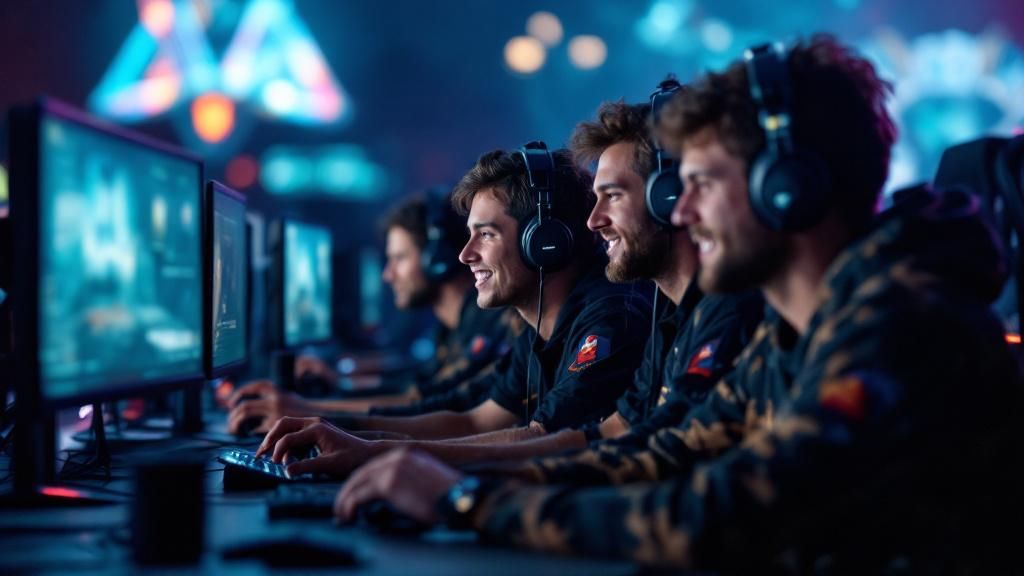
In an increasingly interconnected world, gaming on mobile devices has transcended mere entertainment to become a powerful catalyst for genuine human connection. Tournament competition across platforms like PUBG Mobile and Call of Duty: Mobile has cultivated thriving global communities where gamers forge meaningful friendships whilst battling for supremacy. This article explores how competitive gaming tournaments unite individuals across different regions, investigating the psychological bonds formed through shared passion, team-based cooperation, and the common ground of competitive play that transforms casual gamers into lifelong companions.
The Growth of Mobile Gaming Networks
The rapid expansion of smartphones and improved internet connectivity has revolutionised the gaming landscape, permitting millions of players worldwide to engage in competitive multiplayer experiences from virtually anywhere. What began as simple casual gaming has evolved into a complex ecosystem of coordinated groups, professional tournaments, and specialised platforms. Mobile gaming communities have expanded rapidly, with titles such as PUBG Mobile, Clash Royale, and Call of Duty: Mobile engaging hundreds of millions of active players. This extraordinary growth has created unparalleled opportunities for social interaction and competitive participation on a global scale.
These rapidly expanding communities have significantly transformed how gamers connect and develop relationships. Rather than disconnected play, mobile gaming now enables interconnected networks where players from diverse geographical and cultural backgrounds gather around shared interests. Competitive formats, ranking boards, and tiered progression have formalised competitive play, creating defined pathways for improvement and acknowledgement. The accessibility of mobile platforms has made competitive gaming more accessible gaming, eliminating conventional obstacles to entry and enabling emerging players to display their abilities internationally. Consequently, relationships formed within these communities often go beyond virtual spaces, evolving into genuine real-world friendships.
Developing Long-term Bonds Via Competition
Competitive tournament play serves as a significant catalyst for forging authentic bonds amongst mobile gamers globally. When players face off with one another in structured competitions, they experience shared triumphs and defeats that forge profound emotional ties. These experiences go beyond geographical limits, allowing individuals from different cultural backgrounds to connect on a fundamental level. The intensity of competitive play cultivates shared respect and empathy between participants, transforming initial acquaintances into trusted teammates and enduring friends who celebrate victories together and support one another through challenges.
The cooperative nature of squad competitions amplifies relationship building exponentially. Players must engage in clear communication, develop strategies collectively, and depend on each other’s skills and expertise. This interdependence builds mutual respect and belonging that extends well beyond individual matches. Squad members build private banter, common experiences, and feelings of inclusion within their gaming communities. The regular interaction required for event planning strengthens these bonds progressively, building community ties that offer personal encouragement, gaming companionship, and genuine friendship that many participants regard with equal importance to their offline relationships.
Tournament victories and defeats alike contribute meaningfully to friendship formation. Marking accomplishments collectively strengthens team unity, whilst managing defeats collectively builds durability and compassion. Players come to value one another’s abilities, work around limitations, and work synergistically towards common objectives. These collective moments establish a lasting base for lasting friendships that commonly develop across various games and expand to wider social connections, showcasing competition’s unique ability to unite people authentically.
International Tournament Structures and Competitive Play
The structure of competitive mobile gaming has changed substantially over the last ten years, establishing complex organisational models that facilitate competitive play on an never-before-seen worldwide level. Leading esports bodies and gaming studios have committed significant resources in developing formalised league structures, area-based qualifying rounds, and worldwide tournaments that support vast numbers of competitors across the globe. These contests operate across various levels, from grassroots community competitions to officially recognised competitions delivering substantial prize pools. The standardised formats ensure equitable play whilst enabling participants from various countries to face each other, fostering a feeling of community within the larger competitive environment and proving that talent surpasses geographical and cultural boundaries.
Competitive tournament formats have become crucial in establishing transparent progression pathways for aspiring professional gamers and informal participants alike. Ranked seasons, ladder systems, and performance-driven progression systems encourage continuous engagement and individual development amongst players. The transparent nature of competitive play—where performance metrics are publicly displayed and accomplishments are universally recognised—creates an environment of meritocracy that appeals to players seeking validation and recognition. Furthermore, the incorporation of broadcast streaming services and spectator modes has revolutionised competitive mobile gaming events into shared experiences, allowing millions of observers to witness thrilling matches whilst simultaneously reinforcing the connections between players and fans who celebrate victories and sympathise with losses together.
The Social Repercussions of Formalised Gaming Tournaments
Structured competitive gaming have fundamentally transformed how players perceive competitive play and social connection. These tournaments serve as facilitators of authentic connection, overcoming geographical boundaries and cultural differences. When competitors engage on a worldwide platform, they experience a collective feeling of direction that reinforces personal connections. The formal design of structured competitions creates chances for gamers to display their skills whilst simultaneously earning recognition from competitors. This environment fosters genuine friendships that commonly stretch beyond the competitive sphere into everyday life, illustrating how organised tournaments operate as meaningful relationship builders in the digital age.
The widespread consequences of these esports competitions reach across whole regions, motivating emerging talent and creating mentors within the competitive gaming landscape. Major competitions broadcast worldwide prove that gaming carries legitimate cultural significance, encouraging participants to invest emotionally in their peer groups. Players commonly note that event engagement has improved their interpersonal abilities and teamwork capacity with diverse individuals. Additionally, the financial backing and journalistic focus surrounding major events legitimise gaming as a legitimate social activity, motivating loved ones to back elite gamers. This acknowledgement reshapes isolated gaming experiences into acclaimed community moments that deepen connections worldwide.
